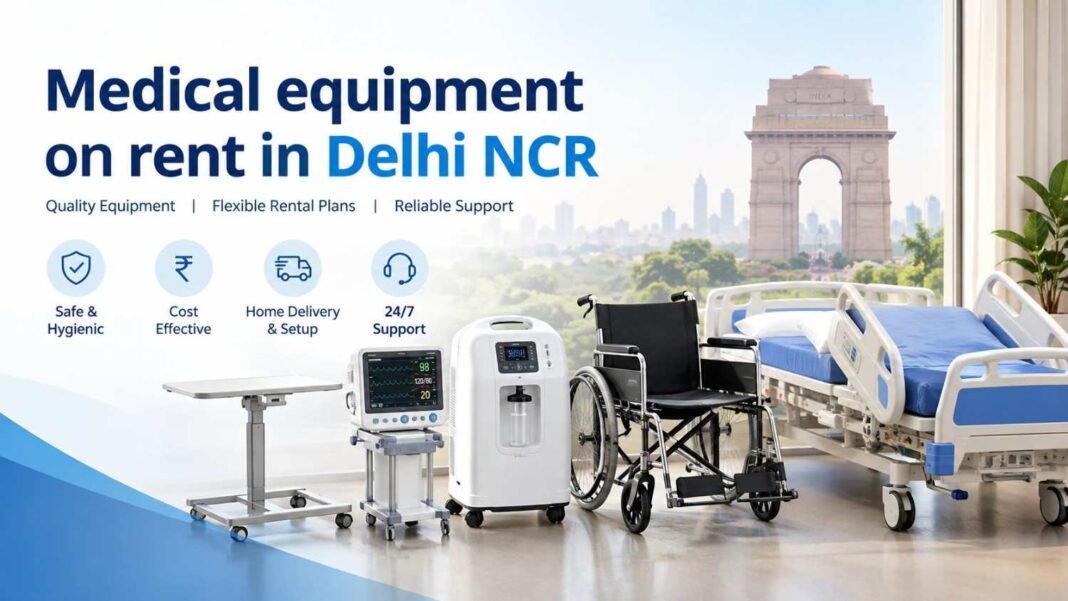


When a family begins caring for a patient at home, comfort and practicality become closely connected. The patient needs an environment that supports daily care, while caregivers need enough room and suitable equipment to perform their responsibilities. For temporary requirements, Medical equipment on rent in Delhi Ncr can help families arrange essential equipment without purchasing everything permanently.
Begin With a Care Plan
Before buying or renting equipment, understand the patient’s care requirements.
The care plan may identify needs related to mobility, positioning, respiratory support, monitoring, or daily activities.
Equipment should support those requirements rather than simply fill the room with medical devices.
Choose the Right Bed
For patients spending significant time in bed, an adjustable medical bed may be useful.
The family should consider:
- Available room dimensions
- Patient weight
- Required positioning
- Caregiver access
- Mattress compatibility
- Electrical requirements
- Side-rail requirements
The bed should be positioned to allow safe caregiver movement.
Improve Mobility Around the Home
If a patient uses a wheelchair or walker, pathways should be wide enough and free from unnecessary obstacles.
Furniture may need to be rearranged temporarily.
Think about the complete route from the bedroom to the bathroom and other frequently used areas.
Create an Organised Equipment Zone
Accessories and supplies should have designated storage.
Avoid stacking equipment where it can fall or become contaminated. Keep instruction manuals and contact information together so caregivers can access them quickly.
Consider Lighting
Good lighting is particularly important when caregivers need to operate equipment or patients need to move at night.
The FDA identifies inadequate lighting as one of the environmental factors that can contribute to difficulty using home medical devices and to injury risks.
Night lights can be useful in corridors, bathrooms, and near the patient’s bed.
Keep Electrical Cables Safe
Many home-care devices require electricity.
Cables should not cross walking paths. Damaged cords should not be used.
If a patient’s essential medical device depends on electricity, discuss backup planning with the healthcare team.
The FDA provides guidance on preparing for power outages involving electricity-dependent medical devices.
Maintain Hygiene
Cleaning requirements differ between devices.
Follow the manufacturer’s instructions and use only approved cleaning methods. The CDC recommends appropriate cleaning and disinfection procedures for healthcare equipment in home-care environments.
Families should also understand which components are disposable and which can be reused.
Plan for the Caregiver
A home-care setup should not focus exclusively on the patient.
Caregivers need room to move, access to supplies, and a practical place to document information or communicate with healthcare professionals.
Reducing unnecessary movement can make long caregiving periods more manageable.
Review Equipment Regularly
A patient’s needs can change.
As mobility improves, some equipment may no longer be required. If the patient’s condition changes, the healthcare team may recommend additional support.
Rental arrangements can be useful when equipment requirements are temporary, but families should still review the agreement before extending or returning equipment.
Why Flexible Rental Can Be Useful
Buying equipment can create a storage and resale problem when the patient no longer needs it.
Rental can provide a temporary solution while the family learns how long the equipment will actually be required.
Before renting, ask about minimum periods, extensions, maintenance, and collection.
A comfortable home-care environment is created through thoughtful planning rather than simply adding medical equipment to a room.
Families looking for Medical equipment on rent in Delhi Ncr should consider the patient’s requirements, home layout, safety, equipment condition, hygiene, and rental support together.
The right equipment, placed thoughtfully and used according to professional guidance, can help create a more organised environment for patients and caregivers during a temporary or extended period of home care.