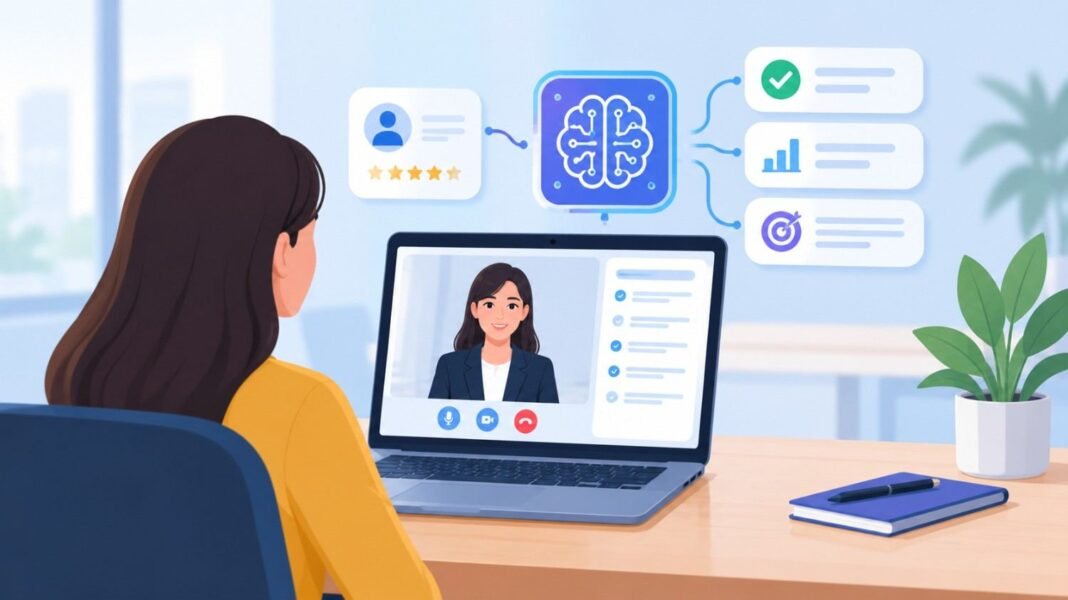


Technical candidate screening can become difficult when organizations receive large numbers of applications for specialized positions. Recruiters need to identify qualified candidates, while engineering teams may have limited time to participate in early-stage interviews.
A structured technology-enabled process can reduce some of these challenges. AI recruitment software for IT industry hiring can support technical screening by organizing candidate information, applying defined evaluation criteria, and helping teams move suitable applicants to the next stage.
The Problem With Resume-Only Screening
Resumes provide useful background information, but they do not always show what a candidate can actually do.
Two applicants may have similar job titles but very different levels of technical capability. Another candidate may have fewer traditional credentials but strong practical experience.
Technical screening should therefore consider skills and competencies alongside resume information.
Defining the Technical Profile
The first step is to create a clear role profile.
Recruiters and hiring managers should agree on:
- Required technical skills
- Preferred skills
- Experience level
- Problem-solving requirements
- Communication expectations
- Domain knowledge
- Role-specific competencies
Once these criteria are defined, technology can support more consistent screening.
Automating Repeatable Tasks
High-volume hiring often requires recruiters to perform repetitive tasks.
Automated workflows can help organize applications, identify candidates who meet basic requirements, and invite selected applicants to structured assessments.
This allows recruiters to spend more time on candidate engagement and stakeholder communication.
Adding Technical Evaluation
Resume screening alone may not provide enough evidence for technical roles.
An assessment or AI-led interview can provide additional information about how candidates reason, explain technical concepts, and approach problems.
This can create a stronger evidence base before a candidate reaches an engineering panel.
Reducing Interview Bottlenecks
Engineering teams can become recruitment bottlenecks when every candidate requires a technical interview with an internal expert.
A structured early-stage assessment can reduce the number of candidates requiring live panel involvement.
The goal is not to remove engineers from hiring. It is to involve them where their expertise provides the greatest value.
Standardizing Candidate Comparison
A consistent evaluation framework can make candidate comparison easier.
Instead of comparing different interviewers’ subjective notes, hiring managers can review candidates against common competencies.
For example, candidates might be assessed on technical depth, reasoning, communication, practical application, and role-specific knowledge.
Supporting Faster Candidate Movement
A well-designed screening workflow can reduce delays between recruitment stages.
Candidates can receive assessments promptly, and hiring teams can review structured results without waiting for multiple interviewers to become available.
This can help organizations keep qualified candidates engaged.
Maintaining Human Review
Automation should not mean that every screening decision becomes automatic.
Human recruiters and hiring managers should retain appropriate oversight, especially when candidate profiles do not fit conventional patterns.
A technology system should support decision-making while leaving room for context and professional judgment.
Measuring Screening Quality
Organizations should evaluate whether their screening workflow is actually improving recruitment.
Useful metrics may include:
- Screening turnaround time
- Interviewer hours saved
- Candidate progression rates
- Assessment completion
- Hiring-manager satisfaction
- Candidate experience
- Quality of shortlisted candidates
These measures provide a more complete picture than speed alone.
Building a Scalable Process
A scalable technical hiring workflow should be able to handle changes in hiring volume without requiring an equal increase in internal interviewer capacity.
This is particularly useful for IT services companies managing multiple projects or hiring campaigns.
Technology can provide the infrastructure, while hiring teams maintain responsibility for defining requirements and making final decisions.
AI recruitment software for IT industry screening can streamline technical hiring by combining structured candidate evaluation with automated recruitment workflows. It can help organizations reduce repetitive screening work, standardize technical assessment, and use engineering interviewers more selectively.
The most effective approach begins with clear role requirements and continues through structured assessment, human review, and measurement. When technology is used to remove unnecessary process friction rather than replace professional judgment, technical recruitment can become more organized and scalable.